





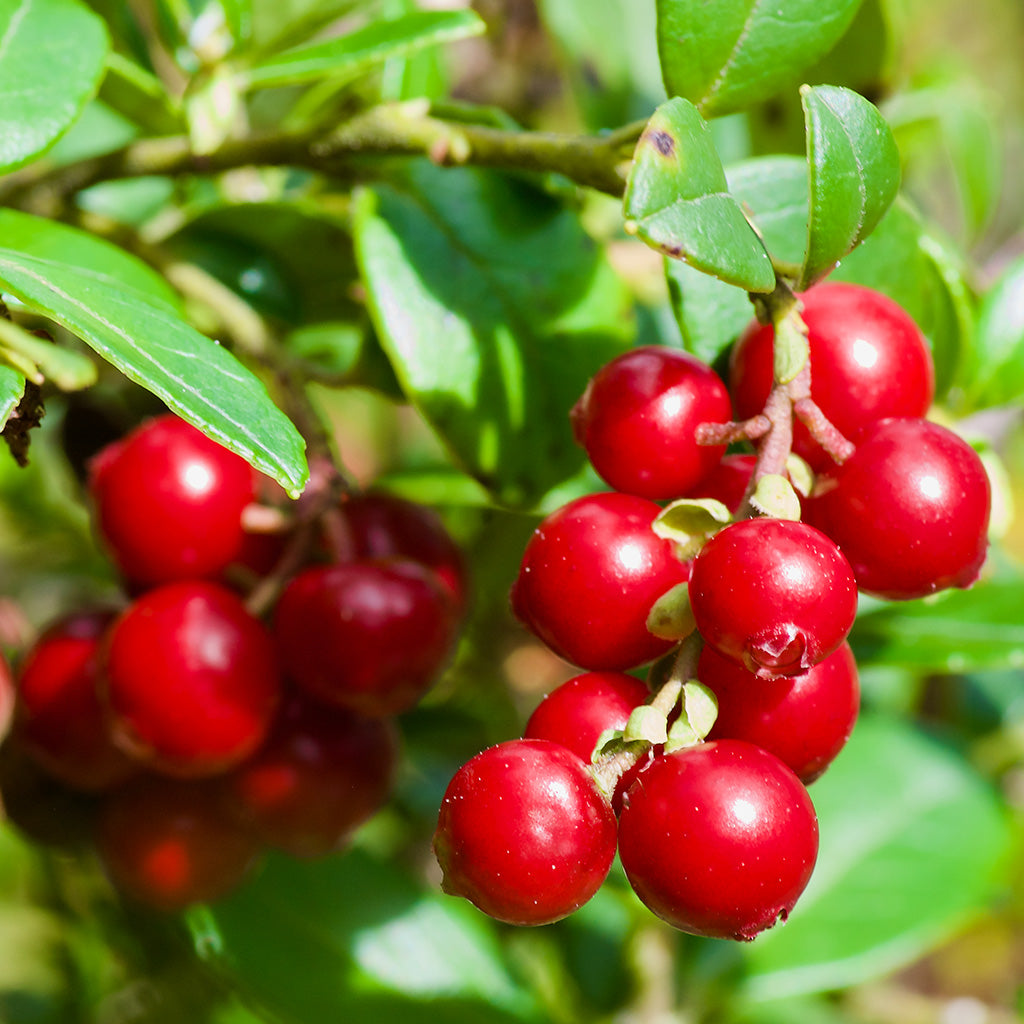
Lingonberry Garden Guide
Lingonberry Care At A Glance
- Native, sturdy, evergreen ground cover.
- Related to blueberries, plants only grow 8-12 in. tall, but spread slowly to form colonies.
- Lingonberries do not compete well with other plants.
- They must have well-drained soil and a pH of around 5.0.
- Lingonberry produces white flowers in May and again in July or August.
- Plants are self-fruitful.
- The fruit ripens to bright red in 2 crops, typically July to August, and again in September & October.
Lingonberry Planting & Care Instructions
Lingonberries require similar growing conditions as blueberries.
- Well-drained, deep humus soil with acidic pH.
- Although they can adapt to full sun locations, locations in part sun, dappled shade or morning sun with afternoon shade is best.
- Soil should be in a pH range of 5.0 to 5.5.
- For the first growing season, we suggest Aluminum Sulphate, a fast-acting soil acidifier.
- Use ¼ to ½ lb. per plant at planting time, not more.
NOTE: Excess acid can cause foliage burn. Please do not overdo it.
- For a more appropriate, long-term soil acidifier, we recommend Hi-Yield Soil Sulfur.
- Use ½ to 1 cup per plant every 3-4 years.
- Mix with fresh compost or aged manure to ensure high microbial populations encourage acidification.
NOTE: Lowering soil pH by 1 unit can take up to 1 year, depending on soil and weather variables.
- Plant lingonberries in a well-drained location, using soil mixed with ½ peat moss or humus, ¼ topsoil, and ¼ sand.
- Water new plants thoroughly.
- After planting, mulch with about 4 to 6 inches of compost, leaf mulch, or shredded cedar to help suppress weeds and help retain soil moisture.
- During the growing season, apply at least 1 inch of water per week.